

Aluminum 5754 H22 Properties


Aluminum 5754 H22 is a non-heat-treatable Al-Mg alloy supplied in a strain-hardened and partially annealed condition. Its main advantage is dependable corrosion resistance combined with moderate strength, making it suitable for transport panels, tank components, flooring, marine-adjacent equipment, and formed industrial parts.
For fabricated aluminum, the frequent concern is whether temper H22 provides enough strength without creating cracking risk during bending or stamping. The answer depends on thickness, bend geometry, surface condition, and the actual mechanical values stated on the mill test certificate.
Aluminum 5754 is commonly specified where atmospheric or marine exposure is more important than maximum structural strength. H22 adds strength over annealed tempers while retaining practical fabrication capability.
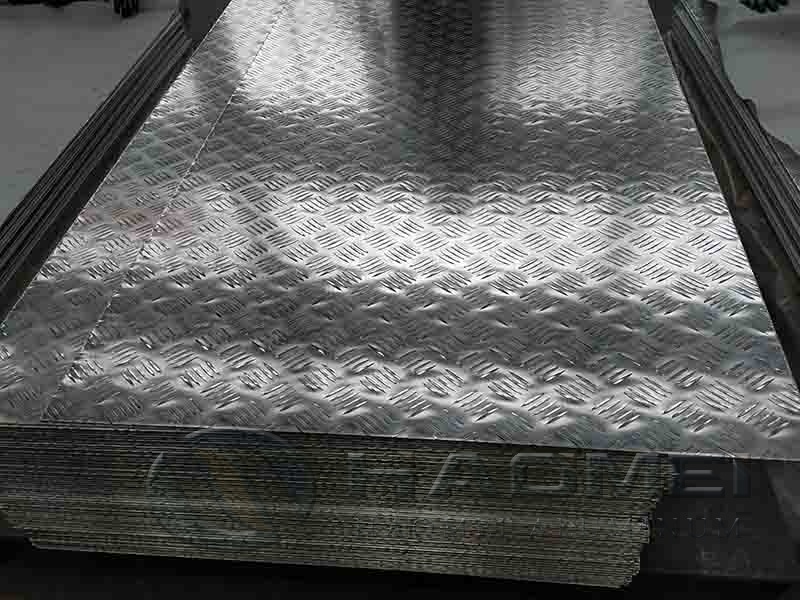
Composition and Mechanical Performance
The chemical composition for EN AW-5754 is defined in EN 573-3. Magnesium is the principal alloying element and supports corrosion resistance and work-hardening response. The composition limits below are mass percentages.
| Element | EN AW-5754 Limit, % |
|---|---|
| Magnesium, Mg | 2.6-3.6 |
| Manganese, Mn | 0.50 max. |
| Silicon, Si | 0.40 max. |
| Iron, Fe | 0.40 max. |
| Chromium, Cr | 0.30 max. |
| Zinc, Zn | 0.20 max. |
| Copper, Cu | 0.10 max. |
| Titanium, Ti | 0.15 max. |
| Aluminum | Balance |
Under EN 515, the H2 designation means strain hardened and partially annealed to the required strength level. The final 2 in H22 indicates quarter-hard temper. It is not a heat-treated T temper, so strength is not restored through precipitation hardening after fabrication.
Typical minimum values for flat rolled EN AW-5754 H22 material, based on EN 485-2, are shown below. Confirm the applicable standard edition, width condition, and thickness range in the purchase specification because certified limits can vary by product form and standard.
| Nominal Thickness | Tensile Strength Rm | 0.2% Proof Strength Rp0.2 | Minimum Elongation A50 |
|---|---|---|---|
| Over 0.5 mm to 1.5 mm | 190-240 MPa | 80 MPa | 8% |
| Over 1.5 mm to 3.0 mm | 190-240 MPa | 80 MPa | 9% |
| Over 3.0 mm to 6.0 mm | 190-240 MPa | 80 MPa | 10% |
| Over 6.0 mm to 12.5 mm | 190-240 MPa | 80 MPa | 10% |
These figures are useful for preliminary design, but they are not a substitute for a mill certificate. For North American projects, ASTM B209 may control instead of EN 485-2. Do not assume that an H22 designation alone establishes identical acceptance values across different standards.
Corrosion Resistance and Fabrication Limits
The standout feature of 5754 H22 is its corrosion performance in wet, salty, and industrial environments. Its magnesium content helps form a stable oxide film, and the alloy is widely used for vehicle bodies, storage equipment, and marine-related fabricated components.
Corrosion resistance is improved by good design and processing discipline:
- Avoid water traps, unsealed lap joints, and deposits that hold chlorides.
- Isolate the alloy from more noble metals where moisture can create galvanic corrosion.
- Specify compatible fasteners, sealants, pretreatments, and coatings.
- Remove iron contamination after fabrication, especially after contact with carbon-steel tooling.
- Require a clean, dry surface condition when material will be painted, anodized, or bonded.
H22 is stronger than H111 or O temper, but it offers less stretch-forming margin. It performs well for moderate bends, roll forming, and controlled press work. Tight radii, deep drawing, and severe stretching should be trialed using production tooling, actual lubrication, and the intended grain direction.
For lightweight transport projects, this balance is increasingly relevant. Battery-electric commercial vehicles and fuel-efficiency programs place added attention on weight reduction, yet panel materials still need corrosion durability and repeatable forming. For tank and road-transport applications, Tanker Plate specifications should also define weld procedures, pressure requirements, and any regulatory approval separately from base-metal temper.
| Requirement | 5754 H22 Response | Specification Action |
|---|---|---|
| Salt and moisture exposure | Strong resistance for an Al-Mg alloy | State environment, coating system, and dissimilar-metal controls |
| Moderate formed panels | Suitable with controlled bend radii | Request bend trials for tight or complex shapes |
| Welding | Generally weldable by common fusion methods | Qualify the procedure and filler for the service condition |
| High structural strength | Moderate, not a high-strength plate solution | Compare with 5083 or another design-approved grade |
| Surface finishing | Can be painted or anodized with preparation | Set surface, cleanliness, and film requirements |
Ordering and Inspection Checklist
Avoid specifying only "5754 H22" on an order. A complete requirement reduces disputes over mechanical values, flatness, surface appearance, and fabrication results.
Use this checklist for plate, coil, slit strip, circles, and foil requirements:
- Standard and alloy designation: State EN AW-5754 to EN 573-3, plus the governing mechanical-property standard such as EN 485-2 or ASTM B209.
- Temper and dimensions: Define H22, thickness tolerance, width tolerance, length, inside diameter, and allowable edge condition.
- Mechanical certificate: Require tensile strength, 0.2% proof strength, elongation, chemical analysis, heat number, and test-standard reference.
- Surface condition: Specify mill finish, protected finish, paint-ready surface, PVC film, or other agreed handling protection.
- Forming requirement: Provide minimum bend radius, bend direction, stamped geometry, and acceptance criteria for visible cracking.
- Corrosion service: Identify salt spray, road de-icing salts, condensation, chemical contact, or outdoor exposure so coating and joining details can be matched.
- Commercial quotation basis: Separate aluminum metal basis, conversion charge, fabrication, packaging, freight, and any surface treatment. This makes price comparisons meaningful when market metal values move.
For receiving inspection, compare certificate values against the stated standard, check thickness at multiple positions across the width, inspect edges for slitting damage, and verify coil or plate identification against the heat number. Where critical forming is involved, retain a sample from each heat for bend or press validation before full production release.
Referenced standards: EN 573-3 for chemical composition, EN 515 for temper designations, EN 485-2 for mechanical properties of flat rolled products, and ASTM B209 where specified for aluminum and aluminum-alloy flat products.
Original Source:https://www.aluminumtankerplate.com/a/aluminum-5754-h22-properties.html
Tags: Aluminum 5754 H22 Properties , 5754 H22 Aluminum ,
Prev:5182 Alloy