

Market of Aluminum Semi-trailer Tankers in Canada


With tightening environmental policies and increasing demands for logistics efficiency, aluminum semi-trailers, leveraging their unique advantages, have seen their market share in Canada continue to climb, becoming a significant growth driver in the commercial vehicle sector.
Canadian Aluminum Semi-Trailer Market Share
Currently, the Canadian semi-trailer market as a whole maintains steady growth, with a compound annual growth rate of 4.49%. Aluminum semi-trailers, as a key segment, are seeing their market share increase year by year. Current market data shows that aluminum semi-trailers account for approximately 28%-32% of the overall Canadian semi-trailer market, and this percentage continues to rise.
In terms of regional distribution, western Canadian provinces (such as British Columbia and Alberta) have a slightly higher proportion of aluminum semi-trailers than eastern provinces due to strong demand for agricultural and resource transportation, with some areas even exceeding 35%. Eastern provinces (such as Ontario and Quebec) have a higher proportion of refrigerated and box-type aluminum semi-trailers due to their concentrated logistics hubs.
With the Canadian government's continued investment in infrastructure and further tightening of environmental policies, it is expected that the market share of aluminum semi-trailers will exceed 40% in the next 3-5 years, becoming one of the mainstream choices in the semi-trailer market.
The core reasons for the popularity of aluminum semi-trailers in Canada
The rapid rise of aluminum semi-trailers in Canada is not accidental, but rather an inevitable result of aligning with local market demands, policy guidance, and industry trends. The core reasons can be summarized in the following four points:
Firstly, the advantages of lightweight design are prominent, reducing operating costs. Canada is a vast country, and long-distance cross-regional transportation is extremely common, with fuel costs being one of the major expenses for logistics companies. Compared to traditional steel semi-trailers, aluminum semi-trailers can reduce weight by more than 40%. This increases payload capacity and reduces fuel consumption.
Secondly, they align with environmental policies and sustainable development trends. The Canadian government has been continuously enacting stringent environmental regulations in recent years, aiming to reduce carbon emissions and promote green logistics. Aluminum semi-trailers not only have lower fuel consumption and fewer carbon emissions, but aluminum alloys are also 100% recyclable, with a high recycling rate, fitting Canada's policy orientation towards "low-carbon transportation." At the same time, Canadian logistics companies are actively practicing sustainable development, and choosing aluminum semi-trailers has become an important way for companies to fulfill their environmental responsibilities and enhance their brand image.
Thirdly, they offer strong corrosion resistance and are suitable for Canada's complex climate. Northern Canada experiences long, cold winters with heavy snow and ice, and roads are frequently sprayed with de-icing salt, requiring vehicles with extremely high corrosion resistance. Steel semi-trailers, constantly exposed to ice, snow, and de-icing salt, are prone to rust and corrosion, typically limiting their lifespan to 8-10 years. Aluminum alloys, on the other hand, possess excellent corrosion resistance, requiring no complex rust-proofing treatments and extending their lifespan to 15-20 years. This significantly reduces vehicle maintenance costs and replacement frequency, making them particularly suitable for the harsh climate of northern Canada.
Finally, industry demand drives demand and adaptability to diverse transportation scenarios. The rapid development of e-commerce, infrastructure construction, and the recovery of agriculture and resource industries in Canada have placed higher demands on the durability, flexibility, and efficiency of semi-trailers. Lightweight and maneuverable, aluminum semi-trailers are suitable for long-haul and heavy-load transportation, and can be customized to meet different cargo requirements, perfectly aligning with the diversified development needs of the Canadian logistics industry. Furthermore, the agricultural and resource transportation needs of western Canada have further promoted the widespread adoption of aluminum semi-trailers.
Mainstream Aluminum Semi-Trailer Types in the Canadian Market
Based on Canada's transportation needs and industry characteristics, aluminum semi-trailers mainly fall into the following four categories, covering most logistics and transportation scenarios. Each type fully leverages the core advantages of aluminum alloys:
1. Tanker Semi-Trailers: This is the most widely used type of aluminum semi-trailer in Canada, accounting for over 60% of the market. Primarily used for transporting diesel, gasoline, and chemical liquids.
2. Refrigerated Semi-Trailers: Canada has a strong demand for transporting temperature-sensitive goods such as fresh produce and pharmaceuticals, leading to rapid market growth for refrigerated semi-trailers. Aluminum refrigerated semi-trailers account for 45% of this market.
3. Flatbed Semi-Trailers: These are mainly used for transporting heavy-duty goods such as large equipment, building materials, and agricultural machinery. They are widely used in infrastructure construction and agricultural transportation in Western Canada. Aluminum flatbed semi-trailers account for approximately 38% of the market.
4. Box Semi-Trailers: Primarily used for transporting general cargo and e-commerce parcels. Aluminum box semi-trailers account for approximately 22% of the market.
Core Alloy Selection
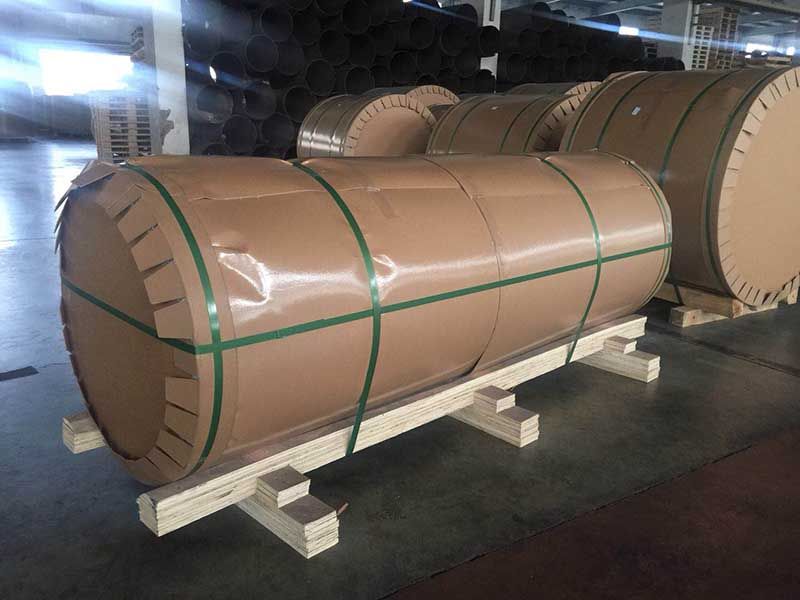
The performance of aluminum alloys directly determines the durability, load-bearing capacity, and service life of a semi-trailer. Considering the transportation scenarios in Canada (long-haul, heavy-load, harsh climate), local aluminum semi-trailers primarily use 5-series and 6-series aluminum sheet for fuel tank truck. 5-series alloys are the most widely used, while 6-series alloys are used for components requiring higher strength. Specific selections are as follows:
1. 5-Series Aluminum Alloys (Aluminum-Magnesium Alloy): This is the mainstream choice for Canadian aluminum semi-trailers, accounting for over 80%. Core models include 5052, 5082, 5182, and 5754. These alloys use magnesium as the main alloying element, possessing excellent corrosion resistance, weldability, and moderate strength. They require no subsequent heat treatment, have low processing costs, and are perfectly suited to Canada's climate and transportation needs.
- 5052 Aluminum Alloy: Primarily used for the side panels, chassis floor, and body skin of semi-trailers. With a yield strength of approximately 193 MPa, it has extremely high corrosion resistance, excellent weldability, and is lightweight, making it suitable for parts requiring high corrosion resistance, especially for vehicles used in coastal and northern regions with frequent snow and ice.
- 5082 Aluminum Alloy: Commonly used in core load-bearing components of semi-trailers such as main longitudinal beams and floor crossbeams. With a yield strength of approximately 275 MPa, higher than 5052, it also boasts excellent corrosion resistance and weldability. Capable of withstanding heavy loads and long-term vibration, it is the core alloy choice for heavy-duty aluminum semi-trailers and is also widely used in the manufacture of tank bodies for oil tanker semi-trailers.
- 5754 aluminum sheet for tank truck: Primarily used in the structural walls and body frames of semi-trailers. With a yield strength of approximately 220 MPa, it exhibits excellent weldability, fatigue strength 30% higher than ordinary steel, and strong corrosion resistance. Suitable for components subjected to repeated stress over long periods, extending vehicle service life.
- 5182 Aluminum Alloy: Often used in the manufacture of special tanks such as powder tank trucks. It has good toughness and can be integrally formed into bent pipes, suitable for tank structures that need to withstand certain pressures, effectively preventing tank deformation and cracking.
2. 6-series aluminum alloy (aluminum-magnesium-silicon alloy): The core model is 6061-T6, mainly used in semi-trailer frames, axles, and other load-bearing components requiring higher strength. Its yield strength is approximately 270 MPa. After heat treatment, its strength approaches that of ordinary steel, while maintaining the lightweight advantage of aluminum alloys.
However, 6061-T6 is more difficult to weld, requiring specialized welding techniques, and its processing cost is higher than 5-series aluminum alloys. Therefore, it is mainly used for heavy-duty, high-stress semi-trailer components, such as frame joints and towing pins in flatbed semi-trailers.
In addition, 7075 aluminum alloy is used in some high-end refrigerated semi-trailers for parts such as crash beams and bumpers. This alloy has extremely high strength, with a tensile strength exceeding 500 MPa, and its collision energy absorption efficiency is 40% higher than that of steel. However, its cost is higher, and its application is currently relatively limited.
Original Source:https://www.aluminumtankerplate.com/a/market-of-aluminum-semi-trailer-tankers-in-canada.html
Tags: 5754 aluminum plate ,
Prev:Al 5754