

5754 Aluminum Sheet for Tank Truck


The wording below reflects English questions often raised on Q&A communities and search forums during recent tanker material discussions. The answers are original and written for tank truck manufacturers, fleet operators, and purchasing teams comparing aluminum grades for fuel, water, chemical, and dry bulk transport.
1. Is 5754 aluminum sheet strong enough for a tank truck body?
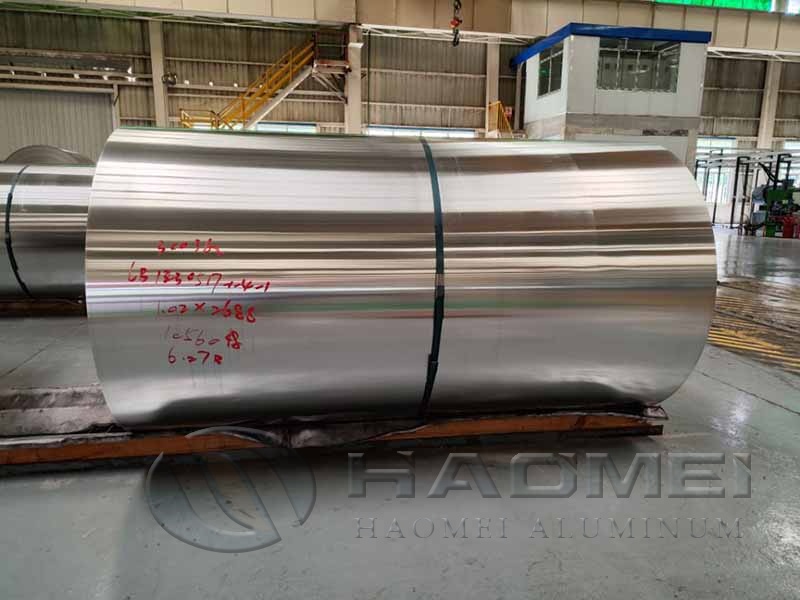
Yes, 5754 aluminum sheet is widely considered suitable for many tank truck bodies, especially for fuel tankers, water tankers, and general road transport tanks where good corrosion resistance, forming performance, and weldability are required. In the aluminum-magnesium family, 5754 has moderate strength, excellent resistance to atmospheric corrosion, and stable performance after welding.
For a road tanker, the material does not work alone. Tank strength also depends on shell diameter, compartment design, baffle spacing, dish head structure, welding quality, frame support, and local transport regulations. This is why 5754 can be a very practical choice when the tank design is calculated correctly.
Compared with steel, 5754 reduces empty vehicle weight, helping increase payload or reduce fuel consumption. Compared with higher-strength aluminum grades, it is easier to form into curved tank shells and dished ends. Many manufacturers prefer Aluminum 5754 when the project values forming efficiency and reliable welded performance over maximum tensile strength.
2. What thickness of 5754 aluminum sheet is normally used for tank trucks?
There is no single universal thickness because each tank truck has a different capacity, tank shape, operating pressure, road condition, and transported medium. However, common practical ranges can be described as follows.
| Tank truck part | Common 5754 thickness range | Practical note |
|---|---|---|
| Tank shell | 5 mm to 8 mm | Larger diameter tanks usually need thicker material or stronger structural support. |
| Dished ends | 6 mm to 10 mm | Forming depth, pressure calculation, and head type affect thickness. |
| Baffles and partitions | 4 mm to 6 mm | Designed to reduce liquid surge during braking and turning. |
| Manhole reinforcement | 6 mm to 12 mm | Local stress around openings must be controlled. |
| Walkway or anti-slip plate | 3 mm to 5 mm | Surface pattern and support spacing matter. |
For fuel tanker applications, 5 mm, 6 mm, and 7 mm are frequently discussed because they balance weight, weldability, and structural reliability. For harsh roads or larger volumes, the design may move upward in thickness. For lightweight urban delivery tanks, careful engineering may allow thinner sections in non-critical areas.
The safest approach is to match thickness with a certified tank design, not only with a price target. When supplied as Tanker Plate, the material should meet dimensional tolerance, surface quality, and mechanical performance requirements suitable for fabrication.
3. Which temper is better for tank truck fabrication: H111, H22, or H32?
For tank truck manufacturing, 5754-H111 is commonly favored for parts requiring bending, rolling, and deep forming. It offers good ductility and is easier to shape into cylindrical shells or dished heads. This can reduce cracking risk during fabrication.
5754-H22 and H32 have higher strength than H111 because they are strain-hardened and partially stabilized. They can be used where the design needs higher mechanical values, but formability is lower than H111. If the workshop must roll large-width plates or press deep heads, the selected temper should match the actual forming process.
| Temper | Strength level | Formability | Typical use in tank work |
|---|---|---|---|
| H111 | Moderate | Very good | Shells, heads, parts with heavy forming |
| H22 | Higher | Medium | Straight sections, parts needing added strength |
| H32 | Higher and stable | Medium | Structural areas with controlled forming |
A frequent mistake is choosing a harder temper only because the tensile strength looks better on paper. If the part cracks during forming or becomes difficult to weld consistently, the project cost rises. For many tanker workshops, H111 remains a balanced and production-friendly option.
4. How does 5754 compare with 5083 and 5454 for tanker applications?
5754, 5083, and 5454 are all aluminum-magnesium alloys, but they are not identical. The best option depends on cargo type, strength requirement, service temperature, forming method, and budget.
| Alloy | Main advantage | Possible limitation | Common tanker relevance |
|---|---|---|---|
| 5754 | Excellent corrosion resistance and forming | Lower strength than 5083 | Fuel, water, general road tankers |
| 5083 | Higher strength and marine-grade durability | Forming may be more demanding | Heavy-duty tanks, marine-related transport |
| 5454 | Good performance under moderately elevated temperature | Availability may vary by region | Hot liquid tanks, chemical tankers |
If the tanker carries gasoline, diesel, clean water, or non-aggressive liquids at normal temperature, 5754 is often technically and economically attractive. If the tank must handle more severe mechanical loads, 5083 aluminium sheet may be reviewed. If the cargo involves moderately elevated temperature, 5454 is often discussed because of its stability in warmer service environments.
The decision should not be made by alloy name alone. Ask for mechanical test data, corrosion suitability for the cargo, welding procedure compatibility, and forming trial feedback from the fabricator.
5. What should be checked before purchasing 5754 aluminum sheet for tank trucks?
Several checks are worth making before placing an order. First, confirm the standard, such as EN 485, ASTM B209, or another specification required by the tank design. The grade should be clearly marked as 5754 or EN AW-5754, and the temper should be stated without ambiguity.
Second, review the mill test certificate. It should show chemical composition, tensile strength, yield strength, elongation, thickness, width, length, heat number, and inspection result. For welded tank fabrication, elongation is especially important because the plate must tolerate rolling, pressing, and local forming.
Third, inspect surface condition. Tank material should be free from serious scratches, heavy oil stains, edge cracks, corrosion marks, and lamination defects. A clean and uniform surface helps improve welding quality and reduces rework during production.
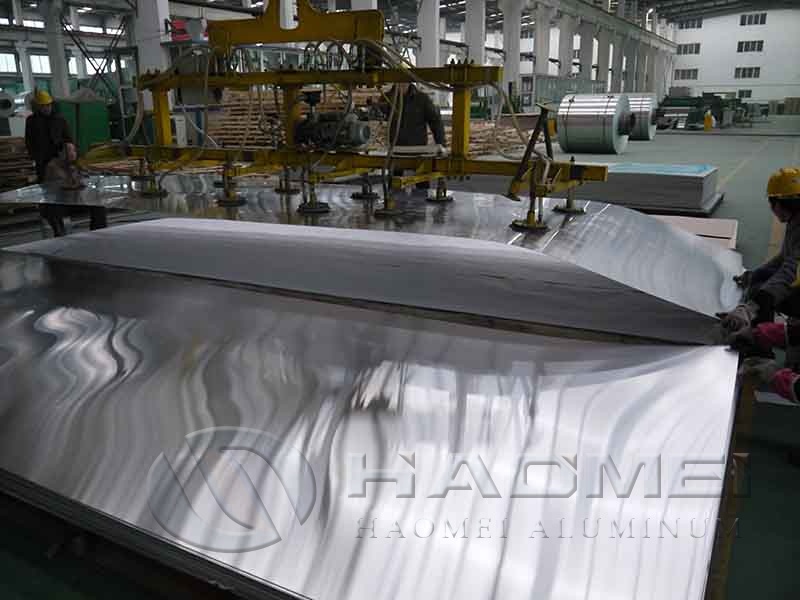
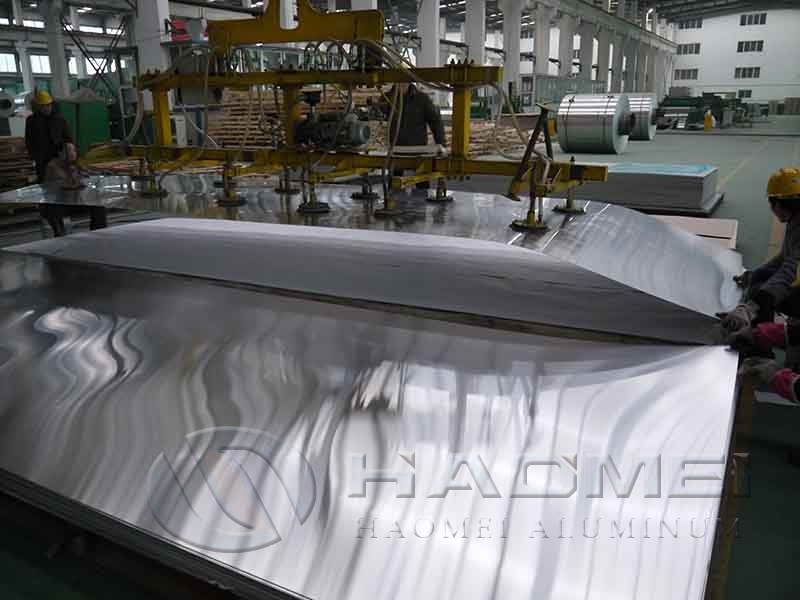
Fourth, confirm width capability. Large tank shells often benefit from wider plates because fewer longitudinal welds can reduce fabrication time and improve appearance. Wide 5754 aluminum sheet is especially useful for large-capacity road tankers when the production line is designed for broad material.
Fifth, discuss packaging and transportation. Aluminum surfaces can be damaged by moisture, rough handling, or friction during long-distance shipping. Protective film, waterproof wrapping, wooden pallets, and edge protection are commonly used for export shipments.
Price should be evaluated with thickness tolerance, width, temper, certification, surface requirement, and delivery schedule in mind. A lower unit price may not save money if the sheet has poor flatness, weak packaging, or inconsistent mechanical properties. For tank truck projects, stable quality is usually worth more than a small price difference per ton.
Original Source:https://www.aluminumtankerplate.com/a/5754-aluminum-sheet-for-tank-truck.html
Tags: 5754 aluminum sheet for tank truck , Aluminum 5754 , tanker plate , fuel tanker aluminum ,
Prev:Al Alloy 5083 Tanker Plate
Next:5083 Aluminium Plate