

5754 and 5083 Aluminum Plate For Fuel Tanker Trailer


In the manufacturing of tanker trailers, the material used for the tank body not only influences the vehicle's tare weight and transport efficiency but also directly affects its corrosion resistance, weld quality, service life, and safety. With the industry's shift toward lightweight transport equipment, aluminum alloy tank semi-trailers—prized for their low weight, high payload capacity, and excellent corrosion resistance—have increasingly become a preferred choice for transporting refined petroleum products, liquid chemicals, and certain types of hazardous materials.
Among the materials used, 5083 and 5754 aluminum plates are the most common aluminum-magnesium alloys employed in the construction of these tank trailers.
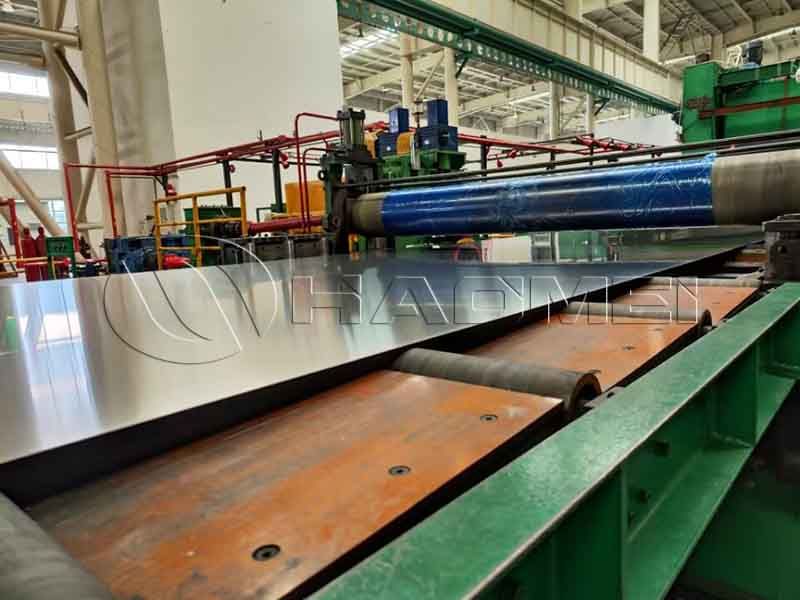
5083 Aluminum Alloy: A Key Material for Tank Bodies
5083aluminum plate is an Al-Mg (aluminum-magnesium) alloy with a high magnesium content. It offers high strength, superior corrosion resistance, and excellent weldability, making it particularly well-suited for transport equipment frequently exposed to humid conditions, salt spray, petroleum products, and complex outdoor environments. In the context of tank semi-trailers, 5083 aluminum is commonly used for tank shells, end caps (heads), internal baffles, and various load-bearing structural components.
Because tank bodies must withstand liquid pressure, vibrations during transit, impact forces during loading and unloading, and long-term fatigue, the materials used must possess high strength and maintain stability after welding.
5083 aluminum retains excellent overall performance following welding and is well-suited for processes such as TIG (argon arc) welding and MIG welding. Its outstanding resistance to seawater and industrial atmospheric corrosion also makes it an exceptional choice for use in coastal regions, high-humidity areas, and chemical transport applications.
Common tempers of 5083 aluminum used for tank semi-trailers include:
5083-H111: This temper features a degree of strain hardening while retaining good formability and weldability. It is typically used for tank shells and end caps that require processes such as rolling, pressing, and welding.
5083-H116: This temper offers superior strength and corrosion resistance, making it especially suitable for tank shells, internal baffles, and external structural components that demand high resistance to corrosion.
5083-H321 Aluminum Plate: Subjected to a stabilization treatment, this alloy offers excellent resistance to stress-corrosion cracking and superior dimensional stability. It is well-suited for tank components that require high fatigue resistance and long-term operational stability.
When selecting materials, the thickness of the tank plating is typically determined by considering factors such as tank capacity, the medium being transported, design pressure, the vehicle's gross weight, and relevant industry standards. For large tanker semi-trailers, aluminum plates in the 5083-H111, H116, or H321 tempers are frequently chosen for the main tank body.
5754 Aluminum Plate: Balancing Formability and Corrosion Resistance
Also belonging to the Al-Mg (aluminum-magnesium) series of corrosion-resistant alloys, 5754 aluminum plate generally has a lower strength than 5083, but it offers superior plasticity, stampability, and ease of processing. 5754 exhibits excellent corrosion resistance, maintaining stable performance during the transport of standard petroleum products, as well as in humid environments and outdoor conditions.
In the manufacturing of tanker semi-trailers, 5754 aluminum is often used for non-primary load-bearing components, such as toolboxes, walkways, protective panels, mudguards, side guards, edge trim, lightweight hatches, piping covers, and various interior or auxiliary structural parts. It is particularly advantageous for components that require bending, stamping, deep drawing, or roll-forming.
Common tempers for 5754 aluminum plates used in tanker semi-trailers include:
5754-H111: Suitable for general bending, rolling, and welding; often used for auxiliary enclosures, protective guards, and certain lightweight structural components.
5754-H22: Features a moderate degree of work hardening, offering a balance between strength and formability; ideal for covers and protective components that require a specific level of structural rigidity. 5754-H32 aluminum sheet: Offers relatively higher strength while maintaining good workability; commonly used for walkways, protective panels, enclosure panels, and components that require a certain degree of resistance to deformation.
5754-O temper aluminum sheet: In an annealed state, it exhibits excellent plasticity, making it suitable for deep drawing, complex bending, or the fabrication of parts that require high formability.
How to choose between 5083 and 5754?
In short, 5083 aluminum sheet is better suited for the primary load-bearing and pressure-bearing structures of tanker semi-trailers—such as the tank body, tank heads, and internal baffles—whereas 5754 aluminum plate is more appropriate for auxiliary structures, exterior cladding, and components that demand superior formability. Using a combination of both allows for vehicle lightweighting and optimized manufacturing costs, all while ensuring safety and durability.
When procuring aluminum sheets for tanker trailers, beyond the alloy grade, it is essential to verify the material temper, thickness tolerances, flatness, surface quality, mechanical properties, ultrasonic testing requirements, and relevant quality certification documentation.
For tankers designed to transport gasoline, diesel, aviation kerosene, or chemical liquids, the appropriate material temper must be selected based on the specific characteristics of the transported medium, tank design specifications, and manufacturing processes.
Original Source:https://www.aluminumtankerplate.com/a/5754-and-5083-aluminum-plate-for-fuel-tanker-trailer.html
Tags: 5083 aluminum plate ,
Prev:Al 5754 H22