

AW 5754 Aluminum


AW 5754 aluminum is a magnesium-containing alloy in the EN AW 5000 series. It is widely specified where corrosion resistance, moderate strength, and workable forming behavior are needed. In recent English-language Q&A discussions, fabricators and purchasing teams frequently ask about temper selection, seawater performance, welding, and whether 5754 is interchangeable with nearby alloys.
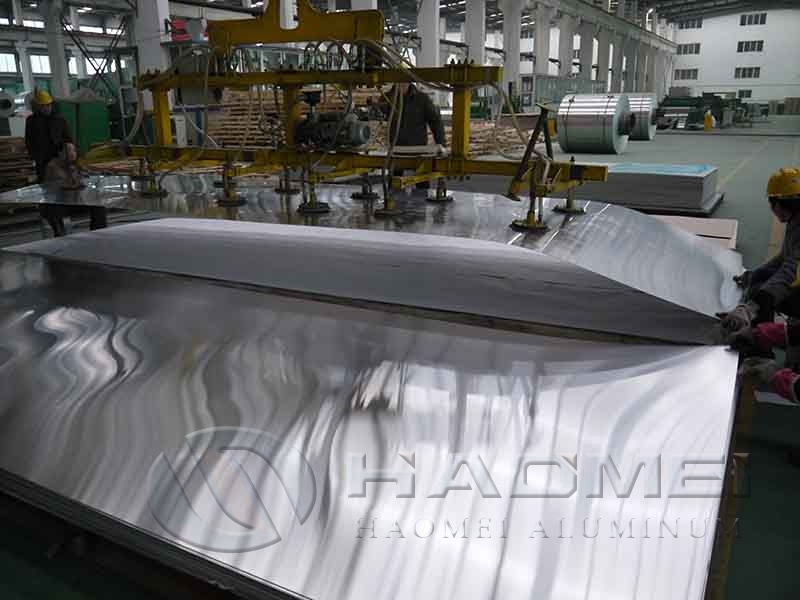
The questions below reflect recurring recent search and Q&A topics around AW 5754 aluminum. Answers focus on practical specification details rather than repeating generic grade descriptions.
1. Is AW 5754 aluminum suitable for marine and wet-environment applications?
Yes, AW 5754 aluminum has strong resistance to atmospheric corrosion, freshwater exposure, and many marine-influenced environments. Its magnesium content gives it better corrosion performance than common 1000-series aluminum, while maintaining better formability than stronger marine alloys such as 5083.
However, "marine suitable" does not mean every design can use the same temper and thickness. Corrosion performance depends on the complete application: salt concentration, standing water, crevice geometry, galvanic contact with steel, coating condition, and cleaning practice. A formed enclosure exposed to splash water has different demands from a welded vessel, dock component, or chemical tank.
For outdoor panels, flooring, vehicle structures, and general wet-service parts, 5754 is often a practical choice. For continuously immersed, heavily welded, or high-load marine structures, comparing the design against Aluminium 5083 may be appropriate because 5083 typically offers higher strength in relevant tempers.
| Application condition | AW 5754 suitability | Specification note |
|---|---|---|
| Outdoor vehicle body panel | Very suitable | H22, H32, or H111 may be selected by forming needs |
| Marine-adjacent enclosure | Suitable | Isolate from dissimilar metals where possible |
| Tank exterior and splash zone | Suitable | Confirm weld procedure and corrosion allowance |
| Permanently immersed high-load structure | Case dependent | Consider 5083 or engineering review |
| Decorative anodized surface | Case dependent | Request surface-quality expectations before ordering |
2. What is the difference between AW 5754 H111, H22, and H32?
The alloy chemistry remains AW 5754. The temper tells you how the material was processed and therefore how it will behave during bending, pressing, welding, and service.
H111 is lightly strain-hardened. It is often chosen when good workability is required, especially for fabrication that includes deeper forming or uneven shapes.
H22 is strain-hardened and partially annealed. It provides a balanced level of strength and formability for many industrial panels and transport parts.
H32 is strain-hardened and stabilized to a higher level than H22. It is commonly selected where improved strength and dimensional consistency are needed while retaining usable bendability.
The correct temper is not simply the strongest available option. A higher-strength temper can increase springback during bending and may require a larger inside bend radius. For a part with deep draws, sharp corners, or multiple forming stages, H111 can reduce production risk. For flat or gently formed panels that must resist denting, H32 can be more suitable.
When requesting a quotation, state the end use, thickness, width, temper, surface requirement, and whether the material will be laser cut, bent, stamped, or welded. These details help prevent a technically valid but production-unfriendly selection.
3. Can AW 5754 aluminum be welded, and does welding reduce its strength?
AW 5754 aluminum has good weldability using common processes such as MIG and TIG. It is frequently used in fabricated transport equipment, tanks, vehicle parts, and general industrial structures. The alloy is non-heat-treatable, so it does not gain strength through solution heat treatment in the same way as 6000-series grades.
Welding does affect the area beside the weld. In H-temper material, heat can locally soften the strain-hardened zone, reducing strength near the joint. This is normal and should be considered in structural design. A component made from H32 material does not retain full H32-level mechanical properties throughout the heat-affected area after welding.
Filler selection should be confirmed by the welding engineer and the intended service environment. In many applications, 5356-type filler is considered for magnesium-bearing aluminum alloys, but the best selection depends on joint design, parent material, exposure temperature, corrosion requirements, and post-weld finishing.
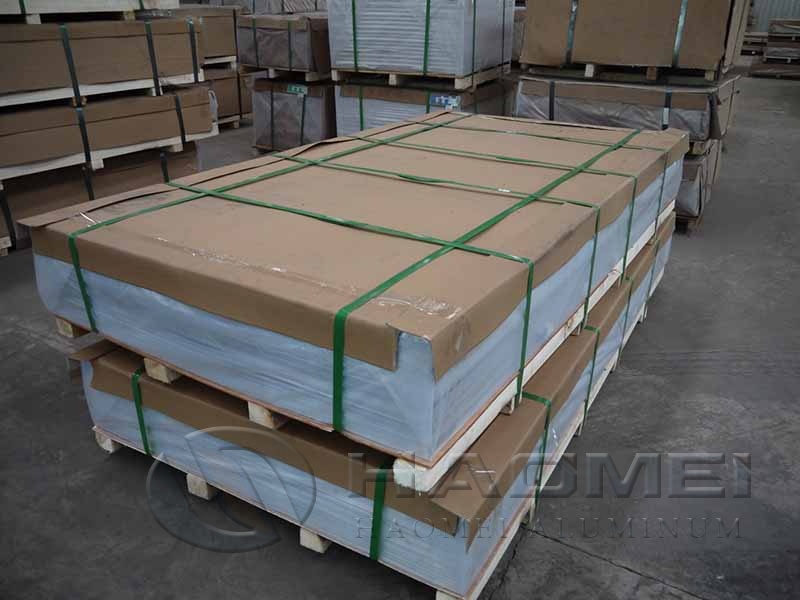
For welded tank and transport projects, material selection should also account for plate flatness, edge condition, and traceable test documentation. A dedicated Tanker Plate specification may be preferable when the application demands controlled properties for formed and welded tank bodies.
4. Is AW 5754 the same as Aluminum 5454, and can they be substituted?
AW 5754 and 5454 are related 5000-series magnesium alloys, but they should not be treated as automatic substitutes. Both offer good corrosion resistance and weldability, yet their chemical limits, mechanical-property ranges, and typical end uses differ.
5454 is commonly associated with elevated-temperature and tanker-related service because it was developed with improved resistance to sensitization in certain temperature ranges. AW 5754 is broadly used for transportation panels, flooring, pressure-related components, and formed industrial parts where balanced strength and workability are valued.
A substitution may be possible only after checking the drawing, applicable material standard, temper, thickness, and required mechanical values. If a customer specification explicitly calls for 5454, supplying 5754 without formal approval can create compliance problems even if the material appears similar in routine inspection.
| Comparison point | AW 5754 | 5454 |
|---|---|---|
| General forming behavior | Excellent | Good to excellent |
| Corrosion resistance | Very good | Very good |
| Weldability | Very good | Very good |
| Common use areas | Transport, panels, flooring, fabricated parts | Tank bodies, elevated-temperature service, transport equipment |
| Direct substitution | Requires review | Requires review |
5. What thickness tolerance and surface quality should I request for AW 5754 aluminum?
Thickness tolerance should never be assumed from a nominal size alone. It depends on the governing standard, product dimensions, temper, manufacturing route, and agreed delivery condition. A 2.00 mm order can have a permitted tolerance range, and that range may affect stamping depth, assembled clearances, coating weight, or final part mass.
Ask the supplier to confirm the standard used for dimensional tolerances, such as EN requirements where applicable. Also clarify whether thickness will be measured at the edge or away from the trimmed edge, because measurement position can matter for thin material.
Surface expectations are equally important. "Mill finish" does not automatically mean scratch-free, oil-free, or suitable for decorative anodizing. State whether the material will be painted, powder coated, polished, anodized, laminated, or left exposed. For laser cutting, mention if protective film is required. For deep drawing, ask about lubrication compatibility and surface cleanliness.
Typical order details can be written in a compact format: EN AW-5754, H22, 2.0 mm x 1250 mm, mill finish, protective film one side, EN 485 mechanical and dimensional requirements, mill test certificate required. This gives the supplier a clear technical basis for production and inspection.
Original Source:https://www.aluminumtankerplate.com/a/aw-5754-aluminum.html
Tags: AW 5754 aluminum , Aluminum 5754 , EN AW-5754 , 5754 H111 , 5754 H22 , 5754 H32 ,
Prev:5454 Aluminum Sheet
Next:5182 Alloy